Parahumans of the Wormverse (paper)
Parahumans of the Wormverse is a set of decks for the card game of Sentinels of the Multiverse.
Sentinels of the Multiverse ("SOTM") is a superhero-themed cooperative card game. Each player has a deck of cards representing a specific superhero, there's a deck representing a specific supervillain, and there's a deck representing the environment. You go around the table taking turns with the players attempting to defeat the villain deck while it does mean things to you and the environment throws a wrench into the works. The heroes and villains and environments are from the titular Sentinels of the Multiverse series; an imaginary comic book company the creators of the board game invented specifically as a backing for the game. This imaginary comic book company has imaginary history; it's great. But the upshot is that you play characters like Legacy, the Wraith, and Bunker facing off against Baron Blade (Superman, Batman, and Iron Man facing off against Lex Luthor with a hint of Dr Doom).
Worm by John C. McCrae1 is a web serial about superheroes. The central conceit is that sometimes, after you've had the absolute worst day of your life, you become a "parahuman" with some kind of superpower. Thematically it's about trauma and how people justify bad decisions to themselves and others. It's sort of a "reconstruction" of superhero media in that it's looking at some of the tropes and coming up with a universe where they make sense - why doesn't Reed Richards cure cancer? Why does every hero have a sob backstory and deep emotional problems? Why do superpowered criminals not have state power drop on them like a tonne of bricks? You might differ on how well it makes any of that make sense, but by jove it's compelling.
In 2016 I started working on some decks for Worm characters for SOTM. These physical decks were kinda the prototype for the digital implementation. That digital implementation has a number of balance and wording changes; the paper decks are mostly of historical interest2. If you want to play with the decks I'd recommend the digital implementation instead.
If you do want to give the cards a go, they're available as a set of HTML files. Download and extract this zip file.
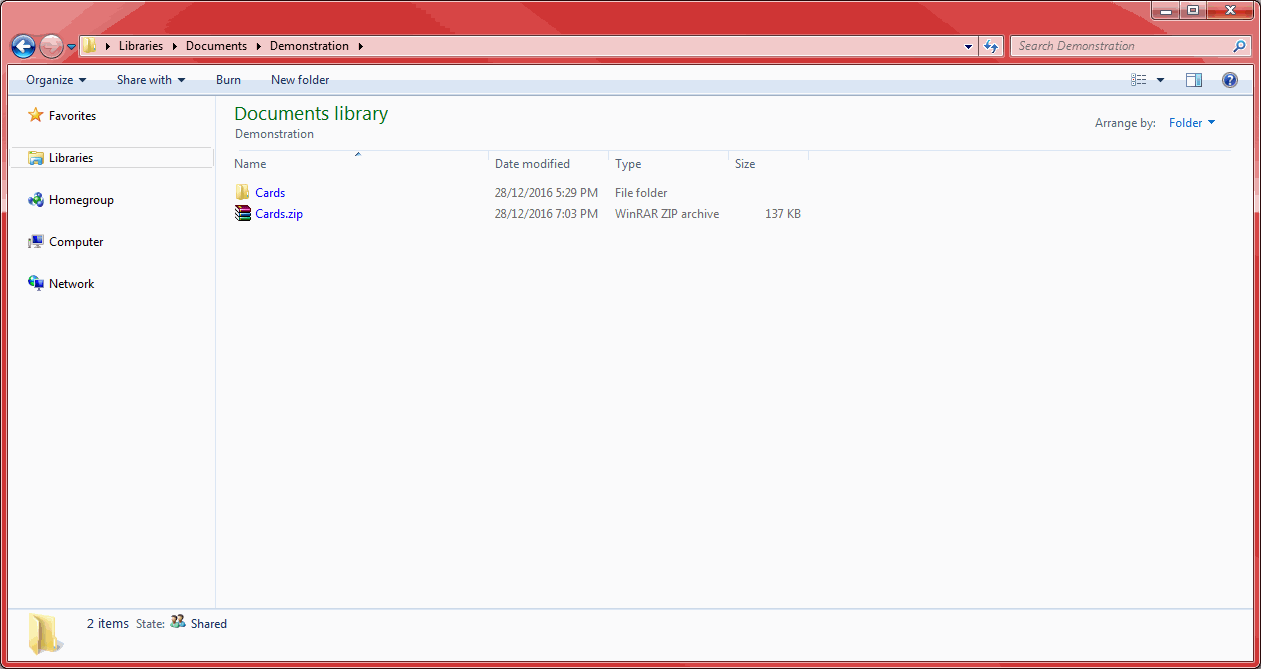
You'll get a bunch of HTML files, one per deck:
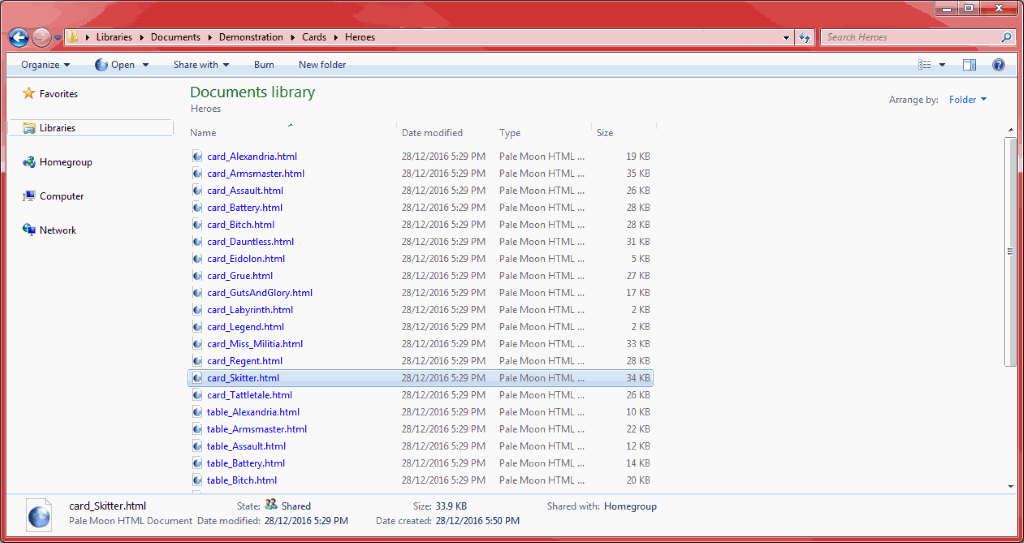
Open up the files in a browser:
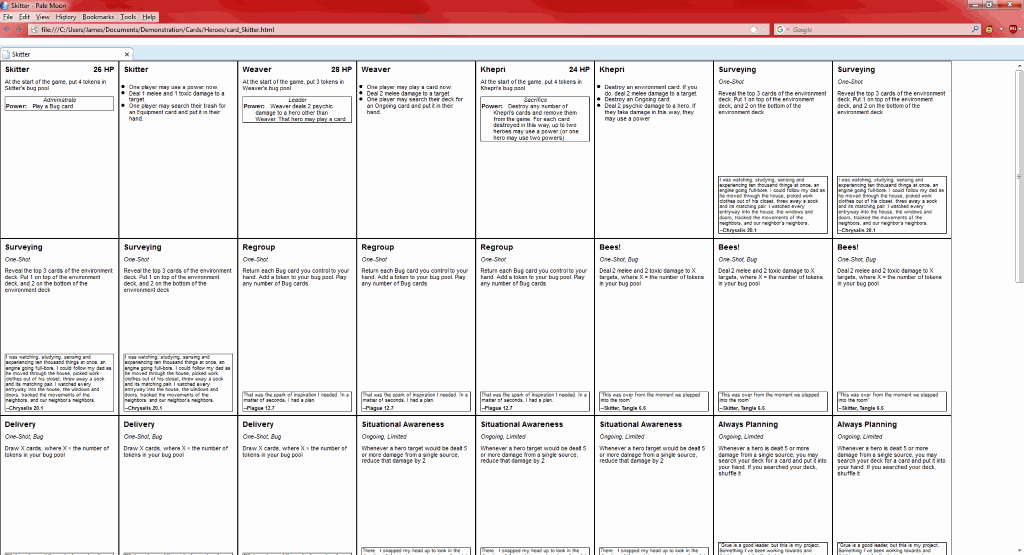
and print them out:
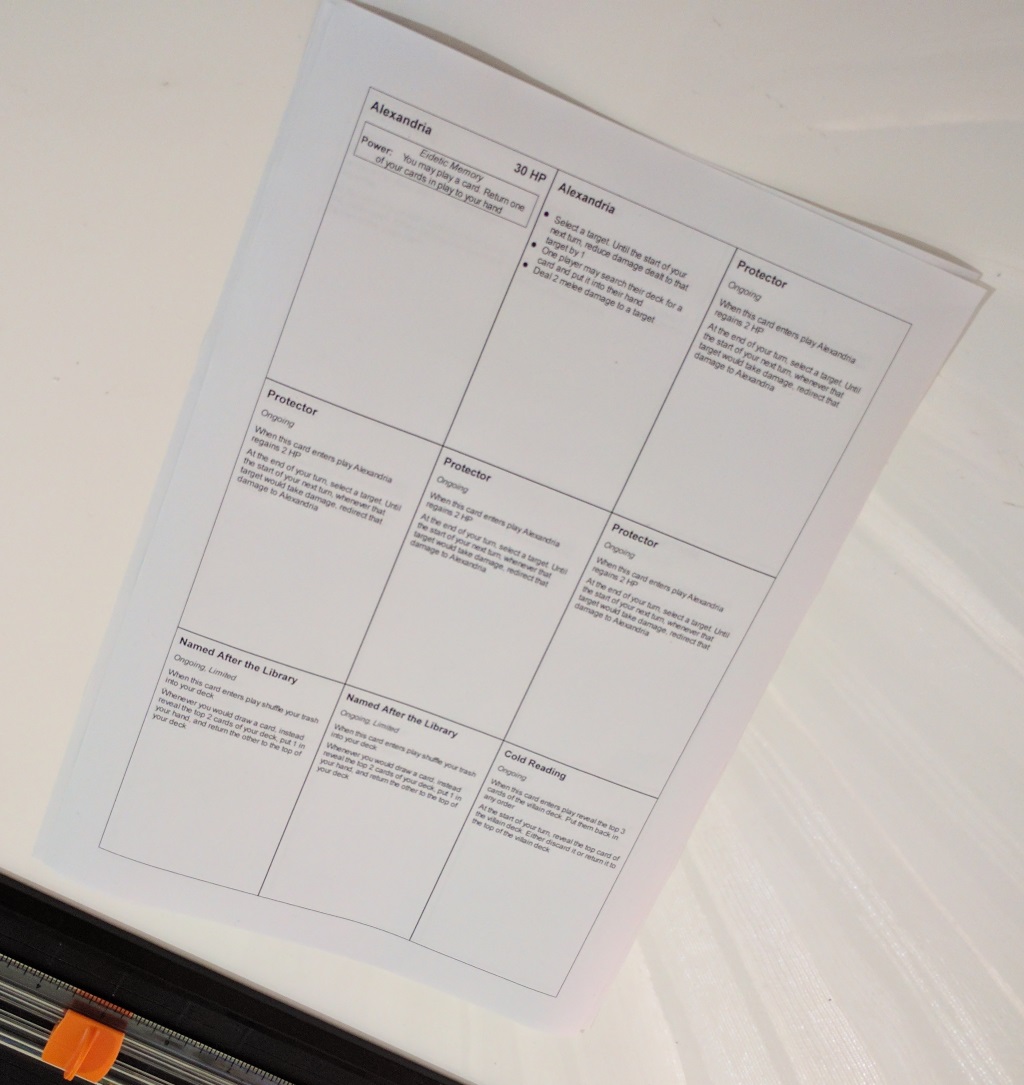
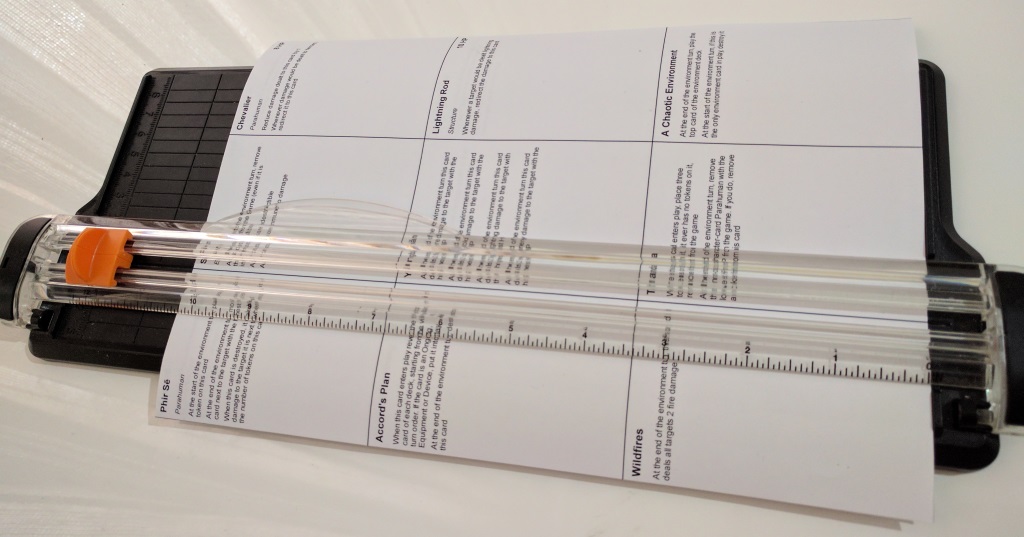
Cut out all the individual cards (a guillotine makes this much easier):
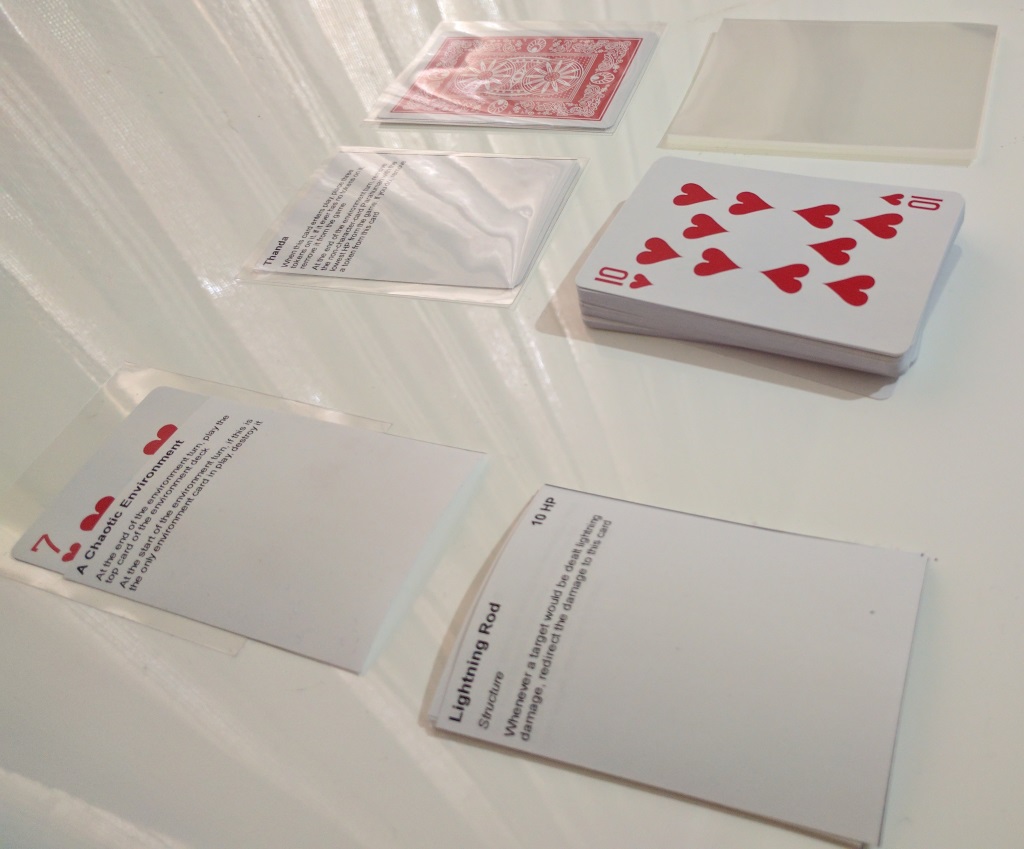
Then put them in a card sleeve with a playing card for support:
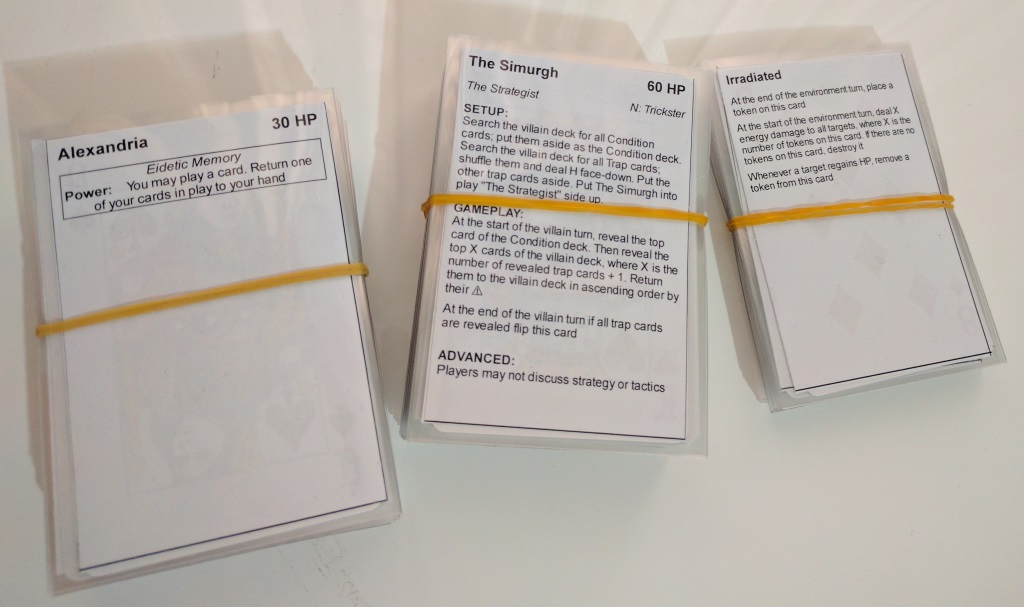
and now you have a deck that you can play with:
I keep the decks on GitHub. The master files for the decks are XML:
<charactercard>
    <name>Dauntless</name>
    <front>
        <hp>28</hp>
        <power>
            <name>Arclance</name>
            <text>Deal X energy damage to a target, where X = 1 + the number of Charge cards attached to Dauntless / 2 (round down)</text>
        </power>
    </front>
    <back>
        <text>
        <ul>
            <li>One player may draw a card now</li>
            <li>Reduce all energy damage dealt to hero targets by 1 until your next turn</li>
            <li>Select an equipment card. Until your next turn, it is indestructible</li>
        </ul>
        </text>
    </back>
</charactercard>
They're converted into the printable HTML via an XSLT script. It's been a surprisingly functional setup; I kinda backed into it. Using HTML as a way to generate a printable page was, I think, a really good idea - it makes it very easy to make boxes of fixed real measurements, format text, etc.. And XML was a markup language I was already somewhat familiar with from my first job out of uni, so it felt like a sensible structured way of storing deck details, especially once I realised XSLT existed and I could use it to generate the HTML from the XML without needing to write an actual program, as such.
Unfortunately XSLT is dogshit. I don't know what it is about XML but everything that touches it is just made entirely out of misfeatures. I barely remember the problems I ran into; probably the most obvious problem is that XSLT templates are XML.
<xsl:template name="card">
<html>
    <head>
        <xsl:apply-templates select="environment | hero | villain" />
    </head>
    <body>
        <xsl:for-each select="/*/card | /*/*/front | /*/*/back">
        <xsl:variable name="thecard" select="." />
        <xsl:variable name="number"><xsl:if test="name()='card'"><xsl:value-of select="$thecard/quantity" /></xsl:if><xsl:if test="name()!='card'">1</xsl:if></xsl:variable>
        <xsl:for-each select="1 to $number">
            <xsl:apply-templates select="$thecard" />
        </xsl:for-each>
    </xsl:for-each>
    </body>
</html>

</xsl:template>
This generates N copies of a card, where N is the "quantity" value in the XML, or 1 if there's no such value. It's not atrocious, but imagine reading a few hundred lines like that. The actual templates repeat themselves a bunch; presumably at the time I couldn't work out how to properly abstract out the differences between the types of card in XSLT.
I experimented a bit with making an XSD schema to catch dumb mistakes I was making in the XML and that was also godawful. At the time it was very unpleasant to combine "At most one of this tag" with "0 to infinity of this other tag" without specifying an ordering between those two tags3. At least, in the version supported by ~all the actual validators. For all I know it might still be the case that XSD 1.1 (which improves this somewhat) has minimal support. I genuinely cannot get into the head of someone who designs a schema language for markup and thinks strict ordering is what people want. So, uh, I wouldn't recommend XML, XSLT, XSD, or most things beginning with X.
-
His internet handle is "Wildbow". You may also know him from his urban fantasy stories Pact and Pale, his biopunk story Twig, Ward, the sequel to Worm, or his sci-fi story Seek.↩︎
-
There are a handful of decks that don't yet have a digital implementation. Specifically, Regent, Panacea & Glory Girl4, two different versions of Assault, an experimental Eidolon, a friend's design for Weld, an experimental Cauldron villain, a Boat Graveyard environment, a PRT HQ environment, and an experimental Lausanne environment. They'll probably move over to digital at some point, but I want to redesign most of them.↩︎
-
That is, you could express
A?B*, and you could expressB*A?, but if you didn't care where theA?occurred with respect to the Bs you had to write the moral equivalent ofB*(AB*)?. And if you wanted at least one B it was even worse; you had to write the equivalent ofB+(AB*)?|AB+5. This is annoying for two tags. If you have something like ten - which I did - the superexponential blowup is a bit of a problem.↩︎ -
In my defence Ward hadn't come out yet.↩︎
-
Why not
B*A?B*andB*A?B+|B+A?B*, which are slightly more readable? XSD refuses any pattern that would require lookahead to disambiguate.↩︎